
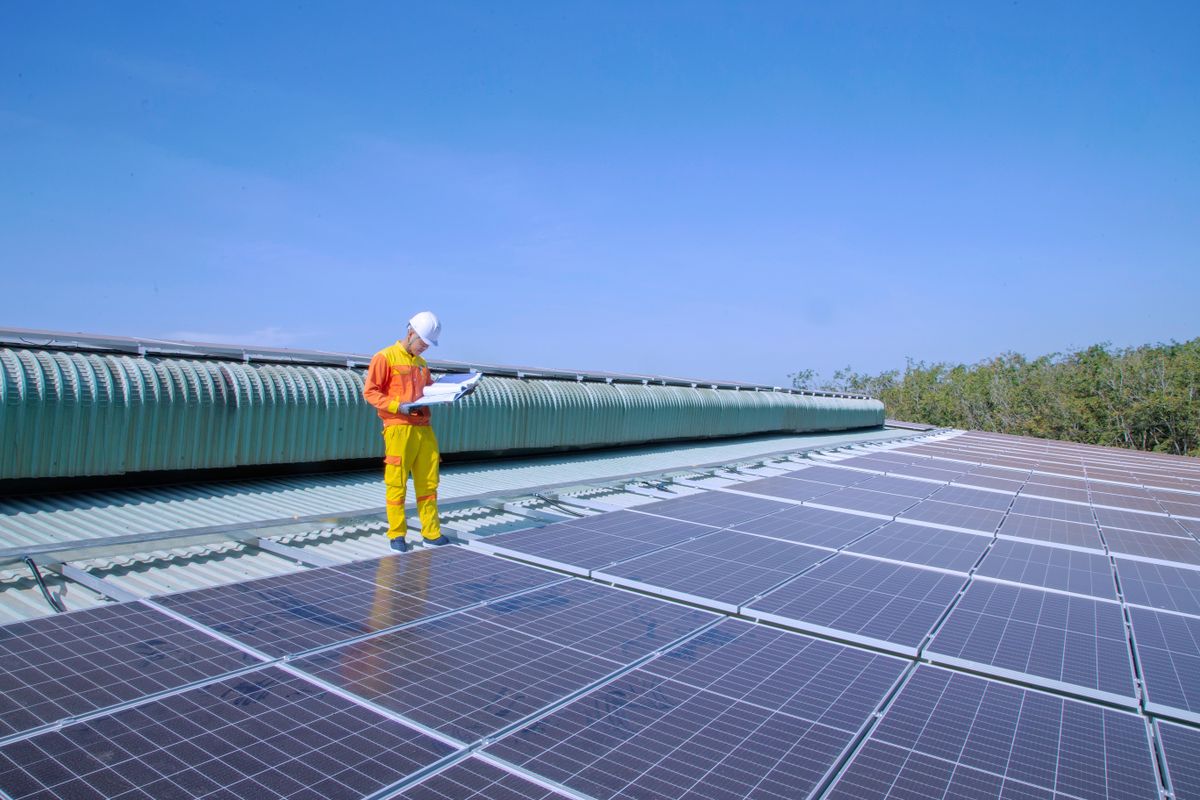
Dust after a haze event may settle on PV modules, but that does not mean they need immediate cleaning. Spain’s IDAE self-consumption guide says rain usually cleans modules and that cleaning is only needed when soiling is excessive, such as from birds or other deposits. The decision depends on the site, tilt, type of soiling and the manufacturer’s instructions.
Check before arranging cleaning
Look at the roof from the ground and note whether soiling is widespread or localised. Compare output with similar periods while accounting for clouds, season and consumption; a short-term dip alone does not prove dust is the cause. If you see damage, exposed wiring or loose parts, do not clean the system; request a technical inspection.
Avoid safety and equipment risks
Do not climb onto a wet or steep roof without suitable protection. Do not walk on modules, use abrasive brushes or high-pressure water, or apply products the manufacturer has not approved. Follow the manual for the installed model; instructions vary. If access requires working at height, use trained personnel with appropriate equipment. Do not handle wiring or disconnect equipment to clean it.
Questions for the service provider
- Does this type of soiling warrant cleaning?
- Which method, water and products are compatible with the module?
- How do access, safety and cost compare with expected output?
- Will the date, work and any defects be recorded?
For a broader system check, see our solar maintenance service. Cleaning does not replace periodic electrical checks.
Source: Spain’s IDAE, Collective Self-Consumption Guide (2024), PV maintenance section.